Key Highlights
- What is a landing page, and how does it differ from a homepage or website landing page
- The landing page meaning in a digital marketing context
- When and why to use a dedicated landing page for campaigns
- How to create an impactful landing page that converts visitors into leads
- How to build a landing page step by step, for any platform or budget
- The landing page strategy principles that consistently drive results
Editor's Note: This post was originally published in July 2020 and has been updated with additional content about different types of landing pages in July 2025.
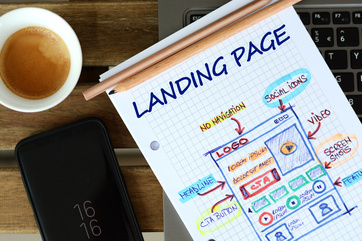
What is a landing page? As you dive into the world of digital marketing, SEO, and paid search advertising, you’ll likely encounter a whole new vocabulary and set of concepts. If you haven’t already, you're likely to have questions about what a landing page is, how it’s used, and its role in your digital marketing strategy. Developing a landing page sounds like a simple task, and it can be, but we want to stress that landing pages are vitally important to lead conversion. Let's break down the importance of landing pages, how they work, and why they are essential for an effective marketing or advertising campaign.
What is a Landing Page?
| A standalone landing page with a clear offer drives focus and conversions far more effectively than a multipurpose homepage. |
A landing page is any web page that a consumer can land on, but in the marketing realm, it’s usually a standalone page, distinct from your homepage or any other page, that serves a single and focused purpose. A landing page is a follow-up to any promises that you’ve made in your content. Essentially, it’s the next step toward a visitor becoming a customer. Your landing page allows you to make a trade, present a special offer, share information, or offer a deal in exchange for contact details.
Landing pages can be click-through, leading to another page, such as your e-commerce site, or lead generation-based. Lead generation landing pages typically offer items like an eBook, free trial, contest entry, or webinar registration in return for the submission of contact information. A good landing page will do its job by convincing a potential customer that it’s worth it to provide personal details in exchange for whatever you have to offer. Landing pages can be found through a general search or via your company website, increasing the likelihood that a potential customer will end up there.
There’s no need to have just one landing page or even just one landing page at a time. In fact, experts in the marketing world probably suggest that you maintain multiple landing pages targeted toward segmented customer populations.
|
Action Steps: |
Benefits of Landing Pages
Website landing pages are built for a specific campaign, audience, and goal. This makes them more focused than a homepage and easier to measure.
The main benefits include:
Clearer Messaging
A landing page can match the exact promise made in your ad, email, search result, or social post. This helps visitors understand the offer right away.
Higher Conversion Potential
Because landing pages focus on one action, visitors are less likely to get distracted. That action could be filling out a form, booking a call, downloading a guide, or making a purchase.
Better Campaign Tracking
Dedicated landing pages make it easier to see which campaigns, channels, and messages are producing results. This helps you improve future marketing decisions.
More Value From Paid Ads
When you pay for traffic, every click matters. A focused landing page can help turn more of those clicks into leads or customers.
Stronger Audience Targeting
You can create separate landing pages for different industries, locations, buyer needs, or campaign offers. This makes the page more relevant to each visitor.
Better Lead Quality
A landing page can qualify visitors before they contact you. The copy, offer, and form fields can help attract people who are more likely to become customers.
Easier Testing and Improvement
Landing pages are easier to test than full website pages. You can test headlines, calls to action, forms, images, and offers to see what works best.
Better Support for SEO and Content Campaigns
An evergreen site’s landing page can help attract organic traffic when they are built around clear search intent, useful content, and a focused offer.
A strong landing page gives visitors a clear path from interest to action. It helps your campaigns perform better and gives your business a clearer way to measure results.
Landing Page vs. Website Homepage
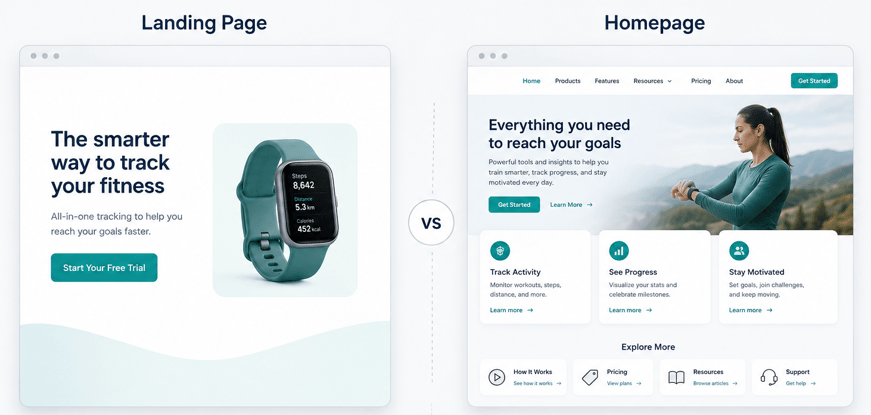
| Why it matters: Landing pages eliminate navigation distractions, helping visitors take action without getting lost in site menus. |
First, some people may wonder why they should bother with landing pages when the primary objective is to drive visitors to their homepage. The answer is that while getting traffic on your home page is undoubtedly a good thing, it is less likely to result in a conversion than a landing page. Home pages contain a lot of information and invite users to navigate to various locations. If visitors reach your homepage with one specific goal in mind, they might be turned off if they have to look through several additional services and product options first. The homepage’s main objective is to direct users to other pages where they will find the information they want. Landing pages eliminate the intermediary step by being the page the user wants - and stating as much in no uncertain terms.
Your homepage is general, whereas a landing page is focused and specific. While the homepage draws visitors further into your website by presenting all the options your business has to offer, a landing page offers one simple and clear call to action.
|
Action Steps: |
Why Landing Pages Outperform Homepages for Conversion
| Focused landing pages reduce bounce and increase clarity, reducing drop-offs and elevating customer action. |
Landing pages convert more traffic because they are focused on one goal or call to action by providing information about a specific offer or item. It has limited navigation, and the simplicity keeps a visitor focused on the goal rather than distracted by multiple links that take them away from the page. A dedicated landing page is also a destination for traffic, and when a high-quality advertisement promotes a single offer, it is more likely that visitors will become customers.
|
Action Steps: |
How Effective are Landing Pages?
|
Data shows landing pages with single offers generate dramatically higher conversion rates, making them a critical asset. |
48% of landing pages contain more than one offer, but having multiple offers can decrease conversion rates by 266%. Additionally, organizations see a 55% increase in leads when they increase the number of landing pages from 10 to 15. Furthermore, 58% of landing pages include clickable graphics, and 73% of customers find live chat the most satisfactory form of communication with a company. Implementing these elements can enhance user experience and potentially improve conversion rates.
|
Action Steps: |
How to Measure a Successful Landing Page
| Without tracking conversion and engagement metrics, it’s impossible to know whether your landing pages are working or why they're not. |
Conversion Rate
Track the percentage of visitors who complete a desired action, such as filling out a form, making a purchase, or signing up for a newsletter. A high conversion rate indicates an effective landing page, while a low rate suggests areas for optimization, such as improving CTA placement, reducing form fields, or enhancing page load speed.
Bounce Rate
Measure the percentage of visitors who leave without taking action or navigating to another page. A high bounce rate may indicate irrelevant traffic, slow loading times, or poor user experience. To improve, ensure your landing page aligns with user intent, has clear messaging, and loads quickly.
Average Time on Page
Analyze how long visitors stay on your landing page. A longer duration suggests engagement, while a short time may indicate confusion or lack of interest. Improve by engaging users with compelling visuals, concise copy, and interactive elements.
Traffic Sources
Identify where your visitors come from: organic search, paid ads, social media, or referrals. Understanding traffic sources helps refine marketing strategies and optimize campaigns. Focus on high-performing sources and adjust underperforming channels to maximize conversions.
|
Action Steps: |
When Should You Use a Landing Page?
|
Matching the right landing page type to campaign goals ensures more efficient results and better ROI. |
There are instances where a landing page is the most effective choice to drive sales or capture leads. It might be when you use PPC advertising, a lead magnet, to focus attention, to attract different types of customers, or for easier testing.
PPC Advertising
A landing page dedicated to a specific advertisement appears higher in search results because Google judges the quality of pay-per-click (PPC) advertising partly on its relevance to the linked page. A dedicated landing page with PPC advertising can be used to feature a new product whose exclusivity creates momentum for sales. It can attract customers seeking a specific price.
A dedicated landing page will attract customers interested in that event, while an event promotion on your brand's website will be discovered by existing customers.
Lead Magnet
A lead magnet is any type of helpful content that is gated by a form, requiring users to fill it out to access the content. Even when they only provide their name and email, they become a lead. Design a landing page specifically for the lead magnet, focusing on content, the form, and keywords. Content offers (lead magnets) include a webinar where a panel of experts answers consumer questions, an eBook, a free sample, or a limited-service offering. Create a guide or checklist that helps consumers complete a task.
Focus Attention
A landing page focuses visitors’ attention on the content. They can either complete the call to action or return to the search results.
Attract Different Types of Customers
Custom landing pages can be created to appeal to different types of customers. The content, page style, advertising, and offer it contains will determine its impact on the targeted customer group. Landing pages can be focused on drawing customers from a specific location, demographic, or individuals looking at price and quality.
Easier Testing
A landing page is a single-page focus, making it easier to test. With the right tools, the page can be tested frequently to ensure it is both compelling and user-friendly. Aspects to be tested include copy, voice, media, or keywords. Personalizing content with information about leads generally leads to higher conversion rates.
|
Action Steps: |
How to Drive Targeted Traffic to Your Landing Pages
|
A targeted traffic strategy ensures your landing page meets user intent and yields stronger conversion outcomes. |
Driving traffic to your landing pages requires a strategic approach that combines organic and paid methods. Search engine optimization (SEO) helps attract visitors by targeting relevant keywords, optimizing page speed, and ensuring mobile-friendliness. Paid advertising through Google Ads and social media platforms like Facebook and LinkedIn allows you to reach highly specific audiences quickly. Social media promotions, influencer partnerships, and email marketing campaigns can significantly boost visibility and engagement.
For sustained traffic, content marketing and retargeting play a crucial role. Creating blog posts, videos, and guest articles that link to your landing page increases organic reach. Meanwhile, retargeting campaigns help recapture potential customers who didn’t convert on their first visit. By implementing these strategies, you can drive high-quality traffic to your landing pages and improve conversion rates effectively.
|
Action Steps: |
Different Types of Landing Pages
|
Why it matters: Choosing the appropriate landing page type (e.g., lead gen vs microsite) aligns design with campaign intent for maximum clarity. |
As a general rule, using landing pages enables you to complete a post-click sequence with a dedicated page that shows the visitor they have landed in the right place. Busy homepages or product pages can be confusing, whereas landing pages clearly outline the outcome of the visitor’s click-through. By creating a landing page, you can refine and improve visitor interaction, increasing the chances of conversion. You also ensure that you get more from your PPC spend - you’ve already paid for this click, and a landing page helps you make it worth your while. You can further increase the possibility of conversions by ensuring you use the right kind of landing page. Let’s take a look at the landing page varieties and what they are used for.
Real Estate Landing Page
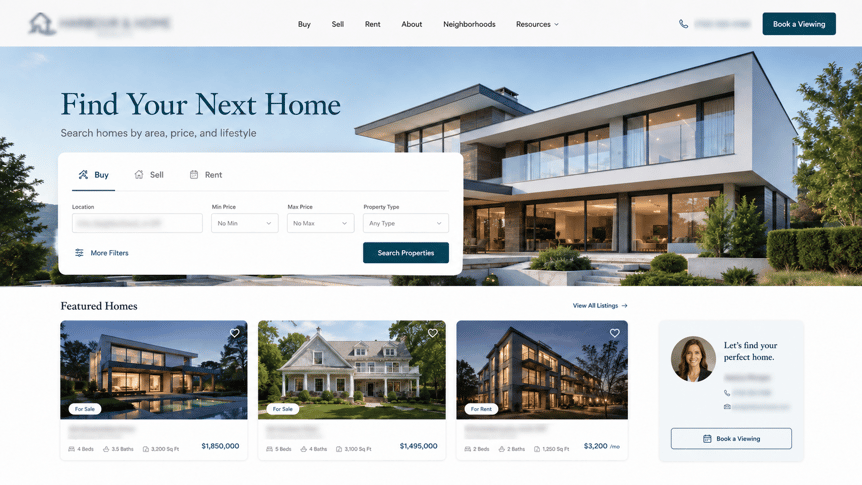
A real estate landing page promotes a property, listing, agent, or real estate offer. Its main goal is to capture leads from buyers, sellers, investors, or tenants.
These pages often include property photos, key features, location details, agent contact information, testimonials, and a short form. The call to action might be “Schedule a Viewing,” “Request Property Details,” or “Get a Free Home Valuation.”
For commercial real estate, the page should highlight details such as location, property size, rental potential, development options, or expected return. For residential listings, strong visuals, clear benefits, and a simple lead form matter most.
Lead Generation Landing Page
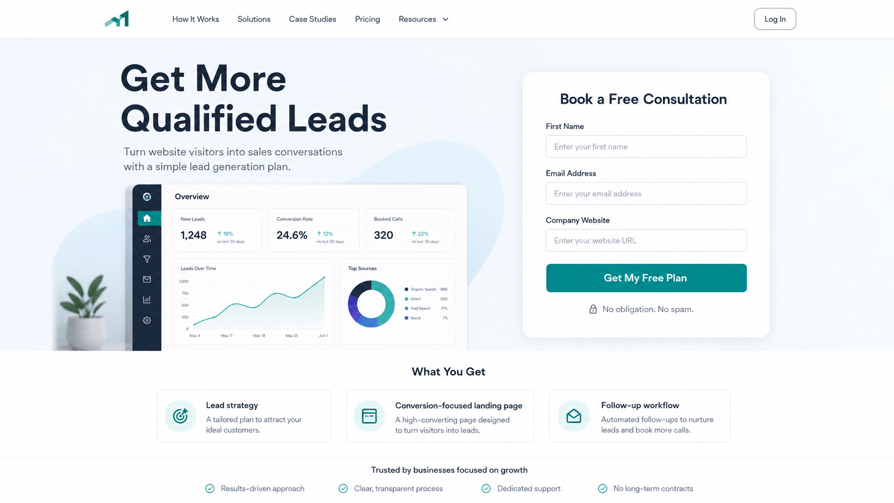
A lead generation landing page collects contact information through a form. It is often used in the middle of the sales funnel, when visitors are comparing options and deciding whether to take the next step.
The offer must feel worth the exchange. For example, a visitor may provide their name and email to download a guide, book a consultation, access a checklist, or register for a webinar.
Click-Through Landing Page
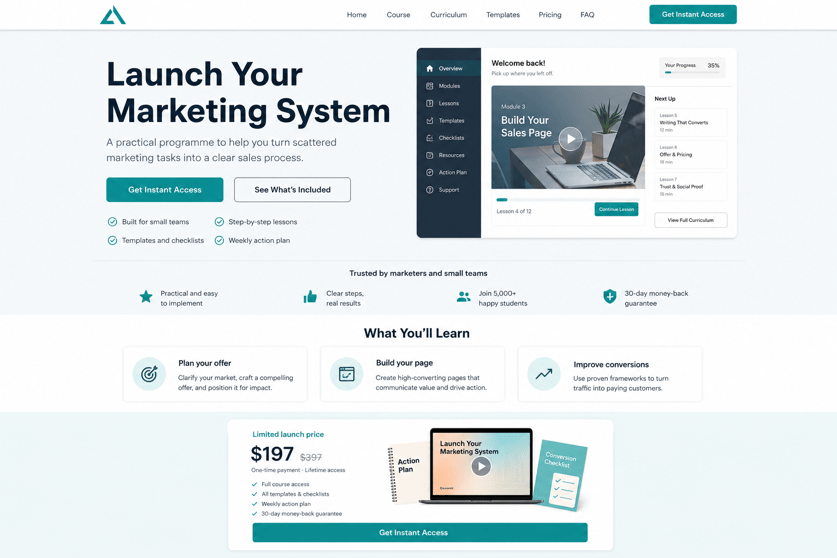
A click-through landing page warms up visitors before sending them to the final conversion page. It does not usually include a form.
This page works well for ecommerce, software, or service campaigns where users need a short explanation before they buy, sign up, or start a trial. The copy should be brief, with one clear call to action.
Squeeze Page
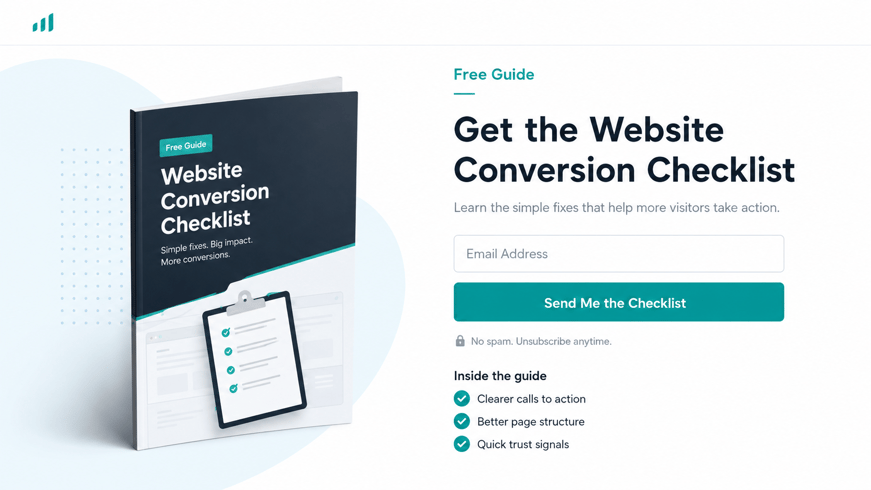
A squeeze page is a short landing page designed to collect email addresses. It is usually used near the top of the funnel.
The page should have a clear headline, a simple offer, a short form, and a direct call to action. It should also make it easy for visitors to continue or exit.
Sales Page
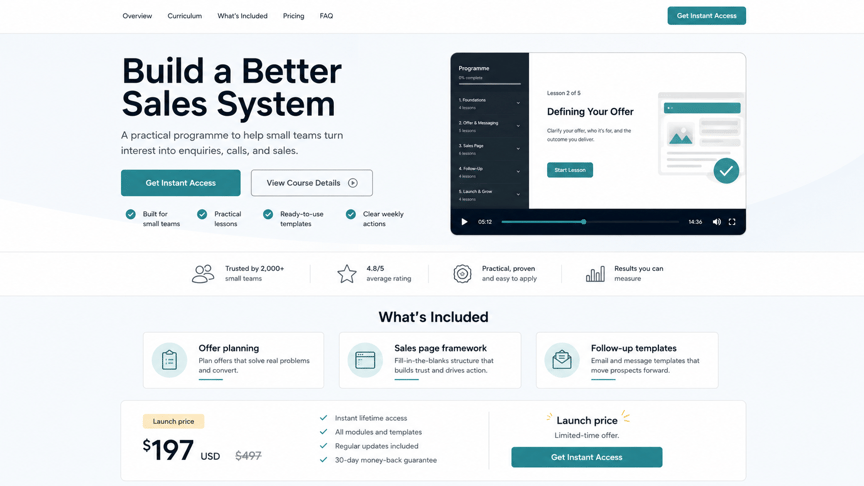
A sales page is designed to persuade visitors to buy. It is often used near the bottom of the funnel, when the visitor already understands the problem and is considering a solution.
The page should explain the product or service, show its value, address common objections, and guide the visitor toward purchase. The length depends on the offer. A simple product may need a short page, while a higher-cost service may need more detail, proof, and reassurance.
Infomercial Landing Page
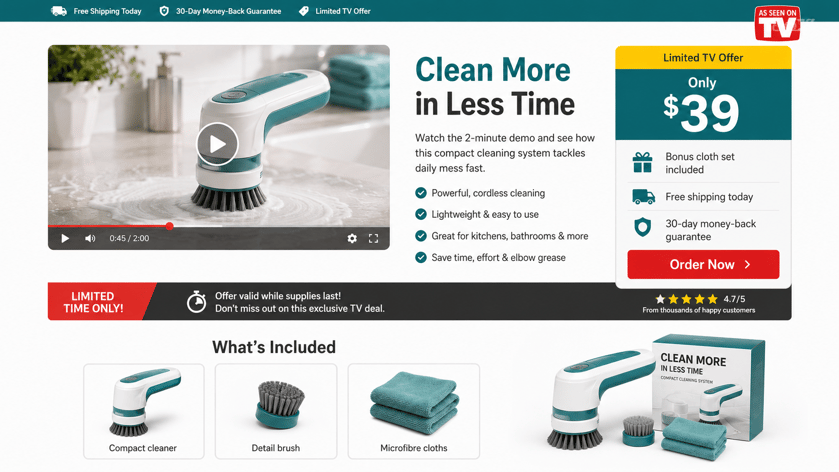
An infomercial landing page uses a longer sales format. It often tells a detailed story, explains the problem, presents the solution, and builds toward a purchase.
This type of page can work for niche products, special offers, or campaigns that need more education before conversion. The key is to keep the content clear, focused, and easy to scan.
Splash Page
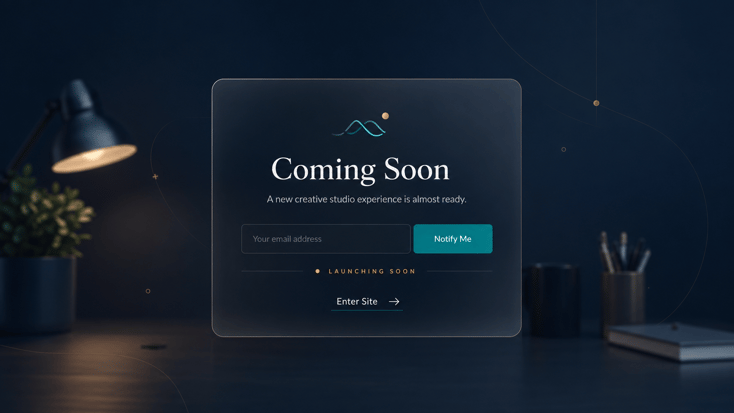
A splash page appears before visitors enter a website or a specific page. It usually includes a simple message or choice.
Common uses include age verification, language selection, location selection, announcements, or limited-time promotions. Splash pages are not usually built for lead generation. They help route or inform visitors before they continue.
Viral Landing Pages
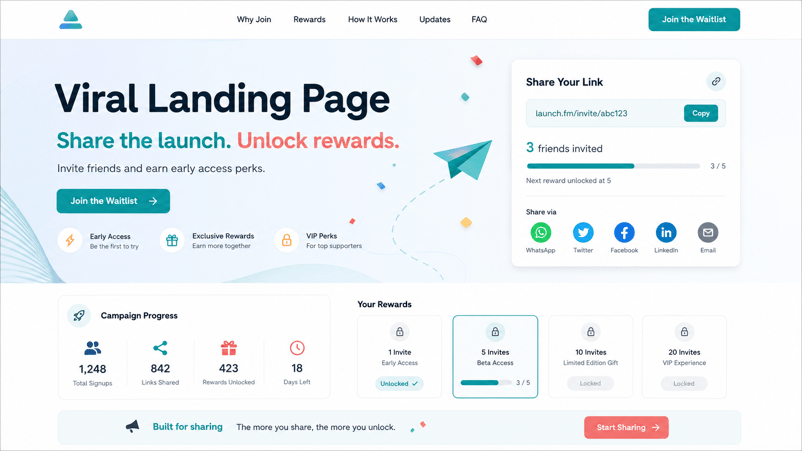
A viral landing page is designed to attract attention and encourage sharing. The goal is often brand awareness rather than direct sales.
The content may include a quiz, video, interactive tool, contest, game, or entertaining resource. The page should include easy sharing options and subtle links back to the brand or offer.
Microsites
A microsite is a small website created for one campaign, product, event, or audience. It has more than one page, but it stays focused on a single goal.
Microsites are useful when a campaign needs more room than a standard landing page. They can support product launches, events, seasonal campaigns, or large advertising campaigns.
Social Media Landing Page
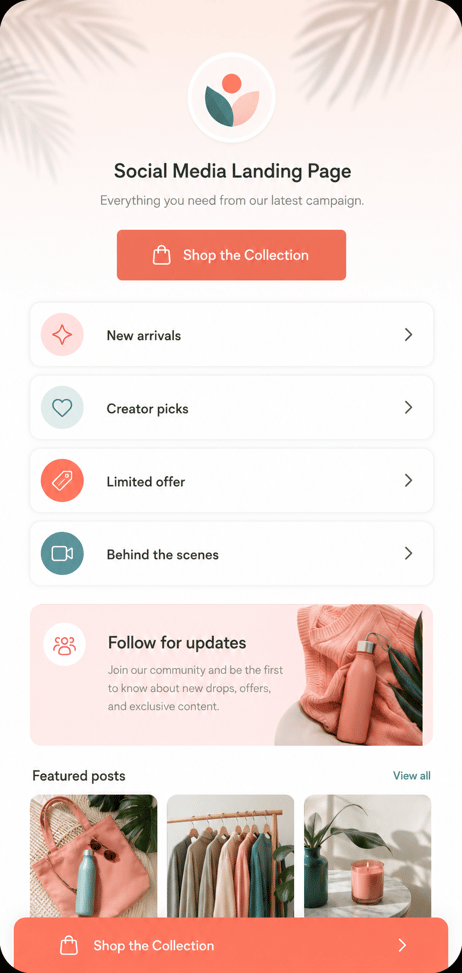
A social media landing page is built for visitors who click from platforms such as Facebook, Instagram, LinkedIn, TikTok, or X.
The page should match the message, offer, and creative that brought the visitor there. This creates a clearer path from the social post or ad to the next action, such as signing up, downloading, booking, or buying.
These pages also make campaign tracking easier because you can measure which social channels, ads, and messages drive the best results.
Email Marketing Landing Page
An email marketing landing page is built for visitors who click from an email campaign.
The page should match the email’s message and focus on one action. This could be downloading a resource, registering for an event, booking a consultation, making a purchase, or completing a form.
Sending email traffic to a dedicated landing page is usually more effective than sending visitors to a general homepage. It keeps the journey focused and makes results easier to measure.
Why Use Landing Pages?
You’ve done a great job building your brand and creating a website that represents it. Now you have to make sure that all of that hard work translates into sales. If you are looking for an effective lead conversion tool, landing pages are definitely the way to go.
A landing page is a great way to drive traffic, improve your SEO, and build your brand. It can also be part of an effective PPC strategy. Approximately 68% of B2B businesses use landing pages to generate leads for future conversion.
Fortunately for you, 44% of these clicks are directed toward home pages, which, as we’ll discuss, is not a good strategy. Landing pages lead customers to a specific product, service, or offer and encourage them to take action. This is your opportunity to create conversions and build your customer base.
If landing pages are so important, why isn’t every business using them? There is a misconception that they are hard to create and maintain. Fortunately, that simply isn’t true. Building an effective landing page is less about flashiness and more about getting the consumer what they’re after.
How to Create a Landing Page That Converts
Essential Elements of a High-Performing Landing Page
Every high-converting website landing page shares the same core structure:
- A single, benefit-driven headline that mirrors the promise of the ad or email that brought the visitor there.
- A clear value proposition explaining what the visitor gets and why it matters to them.
- A prominent CTA button, clear, action-oriented, and repeated at least twice on the page.
- A short form with few fields. Landing pages with 4 form fields convert 120% better than those with longer forms.
- Social proof: testimonials, client logos, case study stats, or review scores.
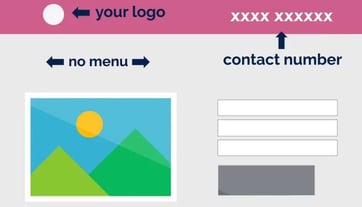
- No navigation menu. Remove the header nav and footer links entirely.
- Fast load time. A 0.1-second improvement in page load time can increase conversions by up to 10.1%.
SEO-Friendly Landing Pages
SEO and landing pages work best when they support the same goal: helping the right visitor find the right offer.
An SEO-friendly landing page is built for both search engines and people. It should match search intent, use relevant keywords naturally, load quickly, work well on mobile, and guide visitors toward a clear next step.
A strong SEO landing page usually includes:
- A clear page title that includes the main keyword
- A helpful meta description that encourages clicks
- A simple, readable URL
- Useful content that answers the visitor’s question
- Headings that make the page easy to scan
- Fast page speed and mobile-friendly design
- Internal links where they make sense
- A clear call to action
The best SEO landing pages do more than rank. They help visitors understand the offer, trust the business, and take action. That action could be booking a consultation, downloading a resource, signing up for an event, or making a purchase.
It is also important to choose the right landing pages for SEO. Some campaign pages, such as short-term PPC pages, may not need to appear in search results. But evergreen pages focused on services, locations, industries, or high-intent topics can support long-term organic traffic and lead generation.
When done well, landing page SEO can improve visibility, attract more qualified visitors, and increase conversion opportunities. The goal is simple: create a page that answers the searcher’s need and makes the next step easy.
How to Build a Landing Page
Whether you use HubSpot, Unbounce, Leadpages, or a custom CMS, the process for building a landing page on a website follows the same steps:
- Define your conversion goal; be specific: form submission, purchase, call booking.
- Write your headline first. It should match the ad copy or email subject line that sent the visitor here.
- Add your value proposition in 1-2 sentences below the headline.
- Build your form. Keep it short. Name and email are enough for most top-of-funnel offers.
- Remove all navigation links from the header and footer.
- Add social proof: a testimonial, a client logo row, or a specific result.
- Set up conversion tracking in GA4 before publishing.
Landing Page Best Practices
Mobile Optimization
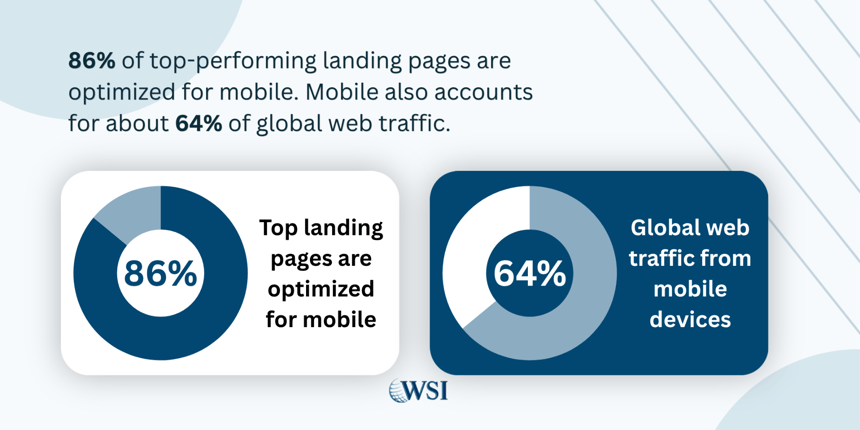
86% of top-performing landing pages are optimized for mobile devices. Mobile accounts for approximately 64% of global web traffic. A landing page that is not mobile-optimized is losing more than half its potential visitors before they can convert. Key mobile requirements: single-column layout, large tap targets, minimal form fields, and fast load time on mobile networks.
Page Speed
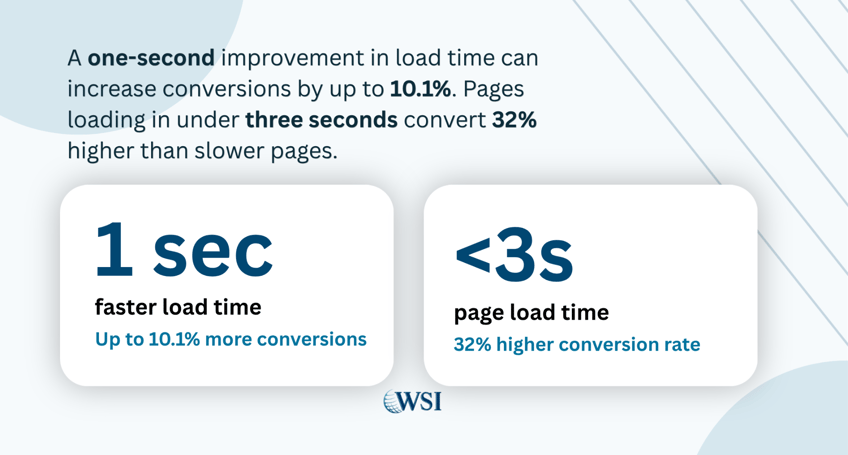
A one-second improvement in page load time can increase conversions by up to 10.1%. Pages loading in under three seconds have a 32% higher conversion rate than slower pages. Use Google PageSpeed Insights to check your score and prioritize image compression, script reduction, and caching.
A/B Testing
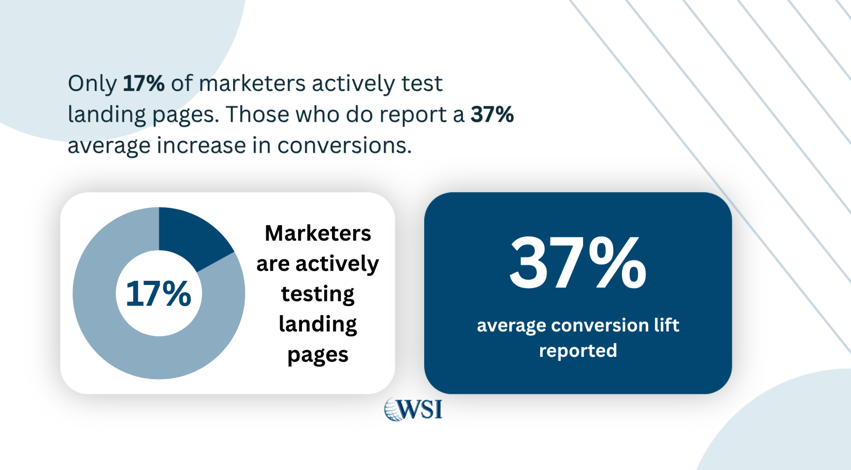
Only 17% of marketers actively A/B test their landing pages. Those who do report a 37% average increase in conversions. Start with headline testing; it has the largest single impact on conversion rate, then test CTA button copy, form length, and social proof placement.
5 Great Examples of High-Performing Landing Pages
1. Shopify – Free Trial Landing Page
Goal: Get users to sign up for a free trial
Why it works:
- Clean and distraction-free design
- Clear headline: “Try Shopify free for 3 days”
- Prominent CTA: “Start free trial”
- Reinforces value with bullet points and trust signals (logos, testimonials)
🔗 Example: https://www.shopify.com/free-trial
2. Webflow – Product Demo Landing Page
Goal: Capture leads via demo request
Why it works:
- Clear and benefit-driven headline: “Build better business websites faster.”
- Video demo preview increases engagement.
- Simple form with just a few fields
- Trust-building elements like customer logos and ratings
🔗 Example: https://webflow.com/demo
3. ClickUp – Product Comparison Landing Page
Goal: Convert users by comparing project management tools
Why it works:
- Focused comparison against a competitor (e.g., “ClickUp vs. Asana”)
- Highlights differentiators with visuals
- Strong CTA: “Get Started – It’s Free”
- Encourages trial with no credit card required
🔗 Example: https://clickup.com/compare
4. Miro – Social Media Campaign Landing Page
Goal: Convert from a LinkedIn campaign for remote collaboration
Why it works:
- Tailored to remote work pain points (from social media messaging)
- Clean, branded visuals matching the ad creative
- Easy signup with Google/Slack integrations
- Explains value quickly with a product GIF
🔗 Example: https://miro.com/remote-collaboration-tools/
5. Unbounce – Ebook Lead Gen Landing Page
Goal: Download a free marketing ebook
Why it works:
- Bold, benefit-focused headline
- Visual of the ebook cover adds credibility
- The form is short and easy
- Call-to-action is compelling: “Download Your Free Guide”
🔗 Example: https://unbounce.com/landing-page-examples/
Each landing page is focused on one goal, eliminates distractions (like top navigation), and aligns closely with the source of the traffic, whether it’s an ad, email, or social post. That’s the secret sauce to high conversions!
Common Landing Page Mistakes You Must Avoid
|
Avoiding common pitfalls like multiple CTAs or slow pages preserves user focus and trust. |
Here is a list of common mistakes that you should avoid on your landing page:
- Too Many Distractions – Landing pages aren’t like homepages; they should focus on a single web page with a clear goal. Pages with multiple links, navigation menus, or competing CTAs can reduce conversions.
- Slow Load Speed – A landing page that’s slow to load can increase bounce rates and lower conversions, impacting effective marketing efforts.
- Lack of A/B Testing – Many businesses fail to optimize their landing pages by testing different elements, such as page content and CTAs.
- Not Optimized for Mobile – Mobile-friendly landing pages work better, yet some businesses still fail to adapt their landing page design for smaller screens.
- Weak or Generic Copy—A landing page is designed to convert visitors, so it should speak directly to their needs with clear and compelling landing messaging.
|
Action Steps: |
Improve Landing Page Performance with AI & Automation
| AI accelerates testing, personalization, and adaptation, giving your pages a conversion edge. |
Adding AI-powered tools and automation can enhance online marketing and landing page content performance:
- AI-driven A/B Testing – Platforms like Google Optimize and AI-powered analytics tools can help identify the best-performing versions of a squeeze page or lead-generation landing page.
- Chatbots & Interactive Elements – AI chatbots can engage website visitors in real-time and guide them toward conversion.
- Personalized Content – AI can adjust page content, headlines, images, or CTAs based on marketing efforts and user behavior.
|
Action Steps: |
Build Landing Pages That Work as Hard as Your Campaigns Do
Now you know what a landing page is, how it differs from a homepage, and the landing page strategy principles that drive real conversion results. The next step is putting that knowledge to work.
WSI's global network of digital marketing experts has built and optimized landing pages across every industry, for every type of campaign, in over 80 countries. Whether you need a single high-converting page or a full landing page strategy across multiple campaigns, we can help.